The Silent Gatekeeper
Science is often described as universal.
Gravity does not change its behavior depending on the people observing it (Except Photons, they do change) A virus does not mutate differently based on the language spoken in the room. The laws of physics do not recognize borders.
In principle, science belongs to everyone.
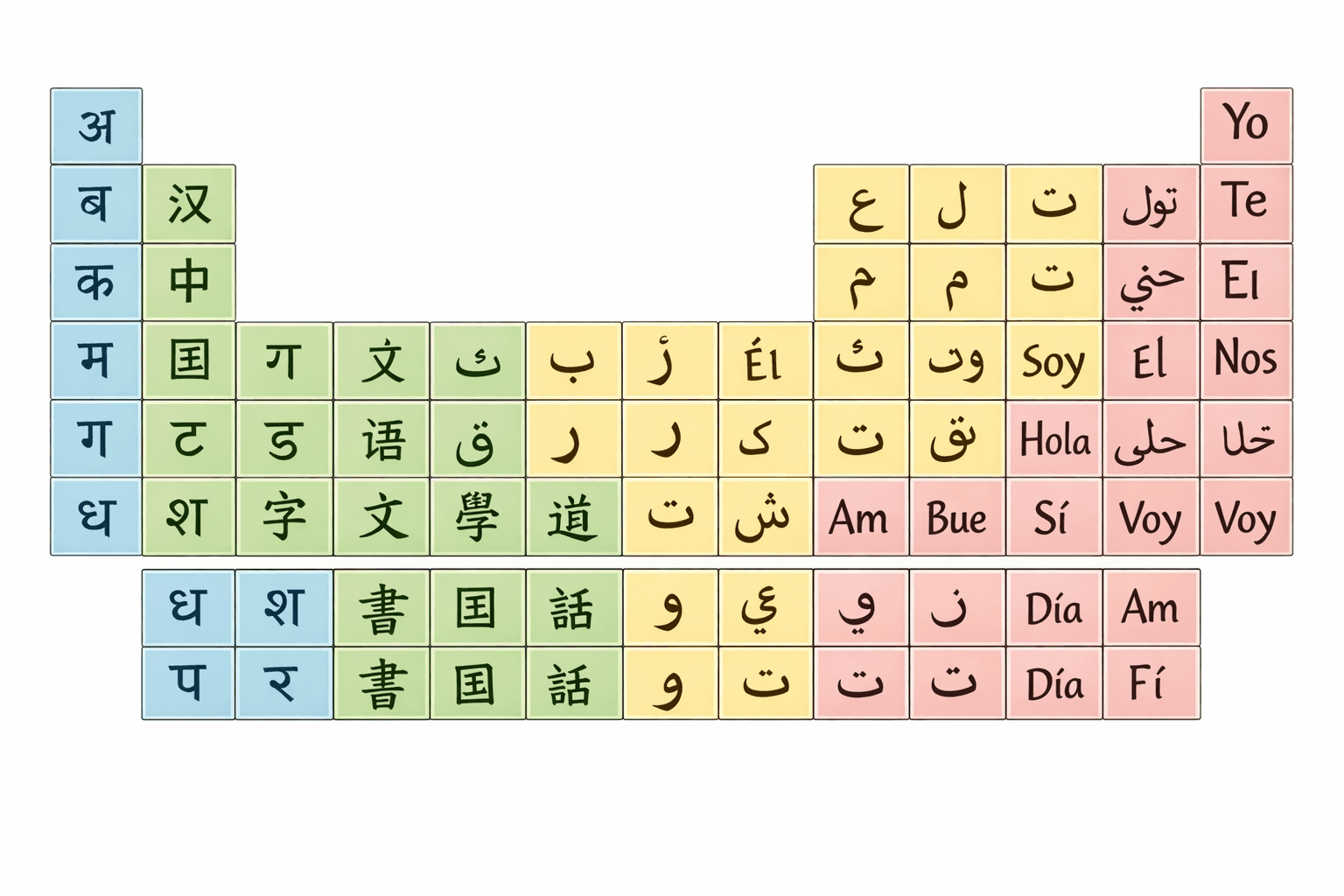
And yet, most of it speaks in one voice. English.
This isn’t something we often pause to notice. For those who are comfortable in English, it feels natural, almost invisible. Research papers, journal articles, conference presentations, scientific podcasts, university textbooks, they flow in the same linguistic current.
Language is never neutral, it determines who gets a seat at the table, who gets the funding, and ultimately, who gets to benefit from the world’s brightest ideas.
The New Latin: How We Got Here
It wasn’t always like this. A few centuries ago, if you were a serious scholar, you wrote in Latin. Later, science spoke a mix of German, French, and English. But after the mid-20th century, the pendulum swung hard toward English.
Today, English isn’t just a preference; it’s the infrastructure.
The Big Journals: The “high-impact” journals that can make or break a career are almost exclusively English-medium.
The Funding Loop: To get global grants, you have to pitch in English. To get cited, you have to be read in English.
It’s not a conspiracy; it’s a system. But like any system, it has side effects. We’ve traded the elitism of the old world for a new kind of gatekeeping, one that values fluency as much as discovery.
The “Invisible Tax” on Global Genius
Imagine you’re a brilliant researcher in India. You’ve spent five years perfecting a new irrigation technique. But to tell the world about it, you have to perform a second, exhausting experiment: translating your nuances into a language that isn’t yours.
The Cognitive and Financial Burden
Native English speakers have a “head start” they rarely acknowledge. While a researcher in West is fine-tuning their data, a researcher in Asia is spending thousands of dollars on “English-polishing” services just to avoid a desk rejection. This is a Language Tax. It’s the extra hours spent wrestling with syntax instead of checking results.
The “Accent Penalty”
This gatekeeping follows scientists to the podium. At international conferences, a brilliant mind might be taken less seriously simply because of a thick accent or a misplaced preposition. We end up prioritizing the delivery over the data.
When Translation Fails the Public
The stakes get higher when science leaves the lab and enters the real world.
When a medical breakthrough happens, there is a “translation lag.” It takes time for that information to trickle down from an English journal to a local community health worker in rural India. In that time gap, misinformation thrives. If the “official” science is locked behind a language barrier, people will turn to whatever information is available in their mother tongue, even if it’s inaccurate. When science only speaks English, it becomes an “urban-elite” luxury, leaving everyone else to wait for the translation.
Even more quietly, cultural framing shifts meaning. A public health advisory translated into multiple languages is not merely converted word-for-word; it is interpreted, simplified, contextualized. Each layer introduces human judgment.
None of this is malicious. It is simply the reality of moving knowledge across linguistic worlds.
But every movement reshapes the message.
Conclusion
Perhaps the deeper question is not whether science should have a global language. Shared language has undeniable value. Collaboration thrives on common ground.
The question is whether common ground must also become high ground.
What would it look like if translation were treated not as secondary work, but as scholarship? If regional-language science journalism were funded with the same seriousness as English publications? If scientific vocabulary were developed more robustly in diverse linguistic ecosystems?
What if curiosity did not require fluency in one particular tongue?
Science may be universal in principle. Its methods are designed to transcend culture and belief. But belonging to science — feeling that it is accessible, approachable, participatory — is shaped by language more than we admit.
If science truly belongs to humanity, perhaps it must learn to sound like humanity too.
Not in one voice.
But in many.