
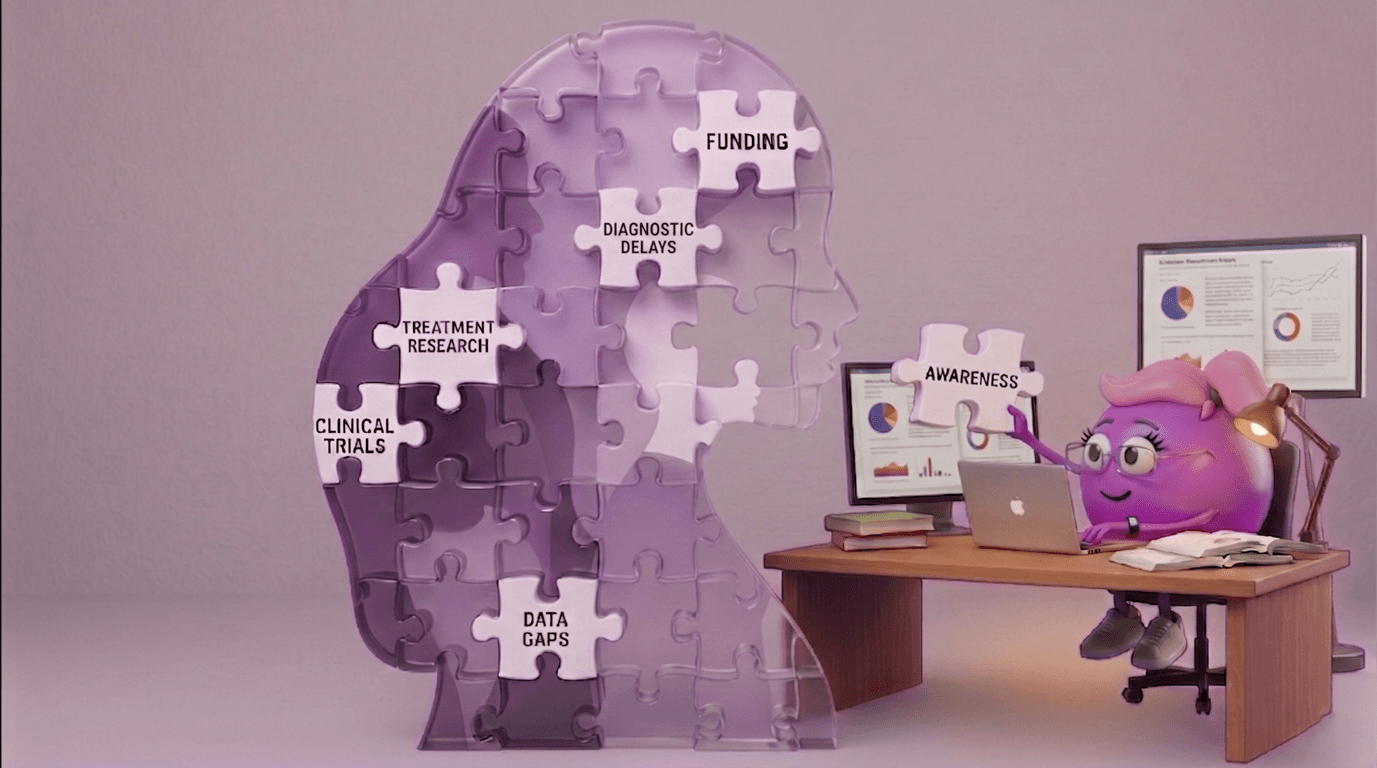

It’s 2026, and India is thinking about women's health. A nationwide HPV vaccination campaign to fight cervical cancer. Maharashtra’s government-run menopause clinics. Karnataka’s menstrual leave policy for female employees. While these efforts are a step in the right direction, we are still a long way from real progress.
The numbers are telling. Globally, women outlive men, yet spend nearly 11 years of their lives in poor health, roughly 3 more years compared to men. Why? It comes down to data gaps that have left women’s health issues largely invisible. And as a result, under-researched and underfunded, delaying timely diagnosis and treatment.
Why Do These Gaps Exist and What Are the Consequences?
The reasons for the data gap in women’s health are deeply interconnected. It starts with years of cultural normalisation. PMS is a part of life. Period pain is a mere monthly occurrence. Menopause is just a life transition. When women were constantly told these situations are normal, they stopped reporting their symptoms.
Historically, human and animal studies involved only male subjects, based on the presumption that men and women function the same way. It was not until 1993 that women were allowed participation in clinical trials in the US. Even after that, clinical trials frequently fail to recruit enough women or consider sex differences when analysing data.
The result of overemphasis on male biology? We have little idea about the prevalence or impact of various women’s health conditions like endometriosis, maternal health, premenstrual syndrome (PMS), menopause, and cervical cancer. And the funding reflects that. These conditions account for 14% of the female disease burden but receive less than 1% of relevant research funding.
Of all private investment flowing into healthcare globally, women's health receives just 6%, and companies focused exclusively on women's health receive less than 1%.
Without proper funding, diagnosis and treatment take a hit. Endometriosis, for example, a condition that causes debilitating chronic pain, takes an average of 10 years to diagnose. That’s one condition. But a Danish study found that women were diagnosed later than men for nearly 770 diseases.
To summarise, it’s a vicious cycle: Normalisation > Underreporting > Low recorded prevalence > Low research investment > Poor understanding > Poor care > Women not seeking help > Normalisation.
What Is the Role of Science Communication in Closing the Women's Health Gap?
We know the problem. We have the numbers. It’s clear that the women’s health gap is costing women their lives. If we count the loss of all women combined worldwide, it amounts to 75 million years of healthy life every year.
Addressing this gap can improve the quality of life for women across ages and generations. But driving real change demands systemic shifts and that will take time.
Another thing can help in the now—science communication. When complex scientific findings are translated into accessible content, women can understand their own health better.
Talking about these topics openly also brings to light what’s normal and what needs attention, targeting the very beginning of the data gap cycle. When women are well-informed and validated, they can make better health decisions.
It can also work as an advocacy tool, driving change in the long run. PMS, period pain, migraines, PCOS, and menopause are real issues that deserve real attention. And writing about them is a powerful way to bring them to light.
How Can We Communicate Women's Health More Responsibly?
Existing data and knowledge gaps pose a challenge for science communication in women’s health. We are compelled to be mindful of what we publish, how we source it, and how we ensure it reaches the right audiences.
Here are 7 principles that can guide responsible science communication in women’s health:
Write about women's health topics (even if no one is)
In India, the awareness gap is massive. Even in metropolitan cities, women frequently haven’t heard of conditions like premenstrual dysphoric disorder (PMDD) or endometriosis. Many don’t know the difference between migraines and headaches. Others believe supplements are only for treating deficiencies, not symptoms. In short, there are a lot of gaps to cover and we need not limit ourselves to what is well-known. If a topic matters for women's health, it’s worth writing about it.
Discuss what you know (and don’t)
Women’s health research and data are incomplete. That’s why we must ensure full transparency in health information. When we write about a topic, we can discuss the existing science and evidence, but we must be upfront when it is dated, limited, inconclusive, or still emerging. This helps in two ways: women know the whole truth, which in turn, enables them to make the right choices.
Reference credible resources
The quality of information written directly depends on the quality of resources referenced. Before starting out, establishing clear research guidelines and a hierarchy of evidence is crucial.
Clinical practice guidelines are a good place to start as they are evidence-based standards followed by health practitioners around the world. Meta-analyses and systematic reviews consolidate findings across multiple studies, giving a broader, more reliable picture of the evidence. Large randomised controlled trials (RCTs) minimise bias. Peer-reviewed journals and government-led patient resources round out the reference list.
Collaborate with medical experts
Clinical practice guidelines and research papers offer credible information. But there are gaps. Practicing medical experts fill that gap. They are adept with female biology, stay updated with emerging research, and most importantly, interact with patients day in and day out, giving them first-hand insights.
A catch here? Doctors can have conflicting opinions or insights on the same topic. To tackle this, ensure the medical inputs are provided by one doctor, while the medical review is done by another. The collaborator is never the checker and vice versa.
Cover the knowledge gaps
Each health article should be structured around one question: “Will it clarify women’s doubts and help them make an informed choice?” Women reading about symptoms want to know whether what they’re experiencing is normal or not. When it comes to lifestyle or diet changes, they want to know why it works and how to apply it.
Allow these cues to shape your content. Answer the ‘why’, distinguish between normal and not, flag when to see a doctor, and offer step-by-step guidance.
Make language accessible
When a reader comes looking for answers, they want them quickly and directly. Unexplained jargon or technical language can confuse or overwhelm. But leaning too heavily on slang or casual phrases can make them question the credibility of what they're reading.
To strike the right balance, focus on clear, straightforward, and empathetic communication. No jargon, but no oversimplification either. No casual fillers, but not emotionless. Write to the reader, provide helpful recommendations, and offer a clear takeaway.
Update information regularly
Researchers and clinicians continue to answer old questions and raise new ones. Clinical practice guidelines are updated every few years. New studies are published every year. This means women’s health resources can never be static.
Routinely revisit published articles to update the references and information with new research and latest guidelines. Responsible science communication is about making sure the articles remain true to the facts not just at the time of publication, but for years to come.
Closing the Gap in India
At present, most guidance online is written for women in the US or UK, leaving Indian women without credible, actionable resources. That's the gap we're addressing at Cranberry.Fit. We are following all of these principles to build Berry Wiki, an open health resource for Indian women.
Science communication alone will not fill data gaps. But it can raise awareness about relevant women’s health issues, validate women’s experiences, and empower them to take action for their own well-being.
Cover illustration created by Nikhitha Mary Paul and Leisha Chavan